
What Your Hands Carry Home: Burnout, Compassion Fatigue and Mental Health for RMTs

What Your Hands Carry Home: Burnout, Compassion Fatigue and Mental Health for RMTs
BlogImage
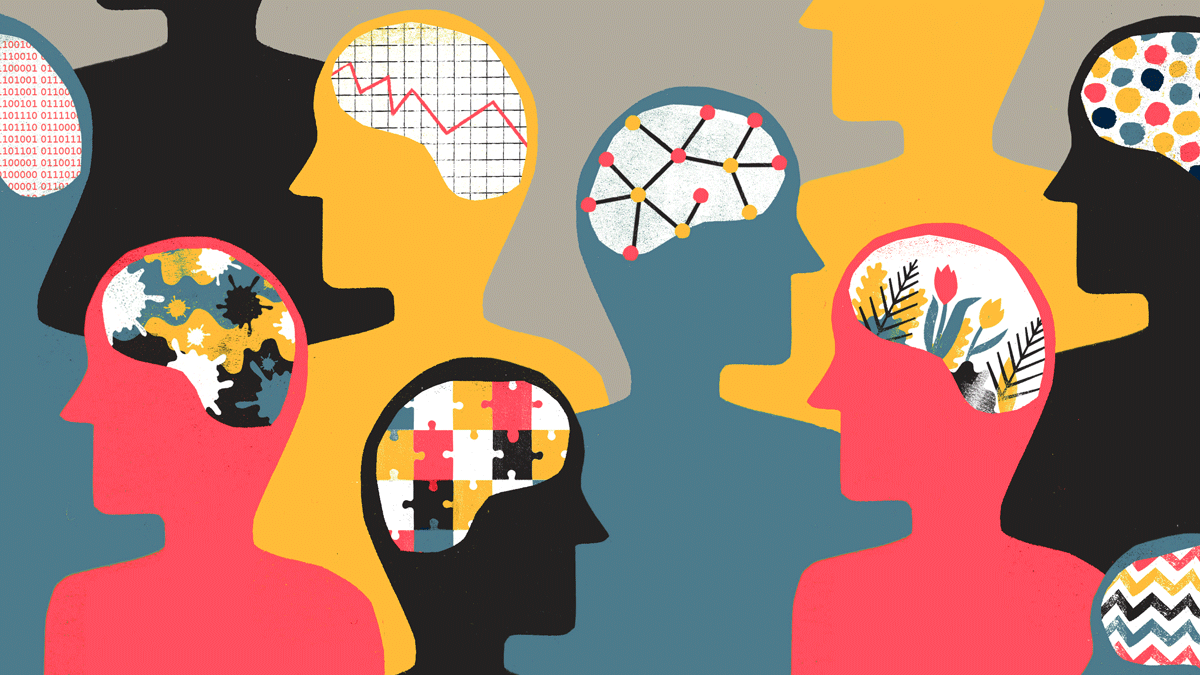
Burnout and compassion fatigue can affect anyone in caring work, and Registered Massage Therapists (RMTs) are no exception. As a RMT, you spend your days close to other people's pain, often with little time to process what you take in.
October brings Mental Illness Awareness Week (October 4 to 10) and World Mental Health Day (October 10), whose 2026 theme is "Lived Experiences Heard: Real Voices, Real Change."
You hear patients' lived experiences every day. Your own deserves the same attention.
Why does massage therapy take an emotional toll?
Much of what makes massage therapy emotionally demanding goes unnamed. Patients may share difficult experiences or emotions during a treatment, and you remain present and supportive, often with little opportunity to absorb and reflect on what patients have shared.
Over time, this can lead to burnout, a deep emotional and physical exhaustion that builds from ongoing work stress, often with a growing detachment from the work and a sense that your efforts don't make a difference. Burnout is also linked with higher levels of anxiety and depression.
Compassion fatigue can develop from the ongoing emotional demands of caring for people who are experiencing distress or suffering. Over time, this can leave you feeling emotionally depleted and less able to access the empathy and compassion you bring to your work.
Vicarious trauma is something different. Hearing about other people's traumatic experiences again and again can gradually change how you see yourself, other people and how safe the world feels, so a patient's story can stay with you long after they've left the table.
Caregivers can often minimize what the work takes out of them, but feeling affected means you're human, and that you care.
How can you tell stress is affecting you?
For RMTs, stress often shows up in the body first, as tension that doesn't release or tiredness that lingers. It can also affect how you experience your work, making it harder to stay present and engaged during treatments.
If these signs are lasting, building, or affecting your work or relationships, it's a good time to talk with a mental health professional.
How does your nervous system shape a treatment?
A patient's nervous system can influence how they experience a treatment, while your own state can also shape the interaction. This mutual influence is known as co-regulation. When you are calm and grounded, your breath, touch and presence can help a patient feel more at ease. When a patient is distressed, you may also notice changes in your own response.
Psychiatrist Dr. Dan Siegel calls the zone where we can feel emotions and still think clearly the window of tolerance. Above it, we feel on high alert or overwhelmed (sometimes called hyperarousal); below it, we feel shut down or disconnected (hypoarousal).
On the table, a patient moving outside their window of tolerance might hold their breath, brace or drift off, and you may notice the same in yourself. Some caregivers may find themselves disconnecting to get through difficult moments, while others may carry the emotional weight of a patient's experience with them after work. A helpful approach is containment: staying present and supportive while maintaining a healthy boundary between your experience and your patient's.
What helps RMTs manage stress during the workday?
Small, repeated habits can help your nervous system stay steady through the day.
1. Open and close your day with a ritual
A simple ritual tells your body when to step into the work and when to step out of it. You might light a candle or use a particular scent as you set up, play a song you love, or set an intention before your first patient.
At the end of the day, close just as clearly: blow out the candle, change your clothes, or write down what you're still holding and leave the page at work. In a scent-free clinic, a stretch you always do at the door works just as well.
2. Keep a small grounding kit within reach
Self-soothing works through the five senses, so keep a few things nearby that bring you back to the present. A smooth stone in your pocket, a calming hand cream, a mint, something sour or a cup of tea can all give your nervous system a quick reset.
3. Ground yourself during a treatment
You can come back to yourself without stepping away from your patient. Feel your feet on the floor, notice the warmth of your own hands, or tune in to a sound in the room. A slow breath with a slightly longer exhale settles your nervous system, and through co-regulation, it can help your patient settle too.
4. Reset between patients
Use something you already do, like washing your hands, as a reset. As the water runs, let the last session go. A minute of movement, such as shaking out your hands, stretching or stepping outside, releases what builds up during a treatment.
5. Plan your schedule with recovery in mind
Build in buffers where you can and pay attention to how many emotionally heavy sessions you book in a row.
How can you build self-care into your work?
Self-care works best built into your workday. In psychotherapy, regular consultation with colleagues is a common part of practice. You can build your own version: a colleague you check in with after a hard day, a small peer group or your own therapy.
How can boundaries protect you and your work?
Clear boundaries can help make a caring profession more sustainable over the course of your career while also helping patients feel safe and know what to expect.
1. Containment and scope
When a patient shares something painful, you don't need to fix it or hold it alone, and staying within your scope protects you both. You might say:
“It sounds like this is bringing up a lot for you, which makes a lot of sense. Sometimes emotions and memories can come up during treatment. If it would help to have a space to work through what’s coming up, you could talk to your doctor or another appropriate health-care professional. For now, what would feel best: taking a moment, continuing with the treatment or stopping for today?”
Offering choice helps a nervous system feel safe.
2. Relational boundaries
Many RMTs are "on" outside of work too, with friends and family asking for advice or a quick treatment. It's okay to say no and keep some of your life free of caregiving.
3. Safety
You have the right to feel safe at work. In the RMTAO's 2025 survey of 2,495 respondents, 73% reported experiencing sexual harassment from a patient during their training or practice, while 21% reported experiencing sexual assault. The survey also found that 69% had never received training on how to respond to sexual assault or harassment.
If you experience harassment or another difficult situation at work, you don't have to manage it on your own. Speaking with a trusted colleague or mental health professional can provide support and help you process the experience.
When is it time to reach out for support?
Therapy can be a place to process what you carry from work, well before things feel unmanageable. If stress, burnout, compassion fatigue or experiences at work are affecting your well-being, consider speaking with a mental health professional.
RMTAO members can also access mental health resources through the RMTAO's member benefits, including reduced rates for psychotherapy through MindSeed. For information about this benefit, visit mindseedhealth.com/rmtao.
If you have ideas for future mental health topics that would be helpful to RMTs, you can share them with MindSeed at info@mindseedhealth.com.
Sources
- Canadian Alliance on Mental Illness and Mental Health (2026). Mental Illness Awareness Week, October 4 to 10, 2026. https://camimh.ca/miaw
- World Federation for Mental Health (2026). World Mental Health Day 2026: "Lived Experiences Heard: Real Voices, Real Change." https://wfmh.global/news/2026.26-08-11_world-mental-health-day-2026
- World Health Organization (2019). Burn-out an "occupational phenomenon": International Classification of Diseases. https://www.who.int/news/item/28-05-2019-burn-out-an-occupational-phenomenon-international-classification-of-diseases
- Mohd Noor, A., et al. (2025). Compassion fatigue in helping professions: A scoping literature review. BMC Psychology, 13, 349. https://doi.org/10.1186/s40359-024-01869-5
- McCann, I. L., and Pearlman, L. A. (1990). Vicarious traumatization: A framework for understanding the psychological effects of working with victims. Journal of Traumatic Stress, 3(1), 131 to 149. https://link.springer.com/article/10.1007/BF00975140
- Koutsimani, P., Montgomery, A., and Georganta, K. (2019). The relationship between burnout, depression, and anxiety: A systematic review and meta-analysis. Frontiers in Psychology, 10, 284. https://doi.org/10.3389/fpsyg.2019.00284
- Palumbo, R. V., et al. (2017). Interpersonal autonomic physiology: A systematic review of the literature. Personality and Social Psychology Review, 21(2), 99 to 141. https://doi.org/10.1177/1088868316628405
- Siegel, D. J. (1999). The developing mind. Guilford Press (third edition, 2020). https://www.guilford.com/books/The-Developing-Mind/Daniel-Siegel/9781462542758
- Ogden, P., Minton, K., and Pain, C. (2006). Trauma and the body: A sensorimotor approach to psychotherapy. W. W. Norton. https://wwnorton.com/books/Trauma-and-the-Body/
- Brooks, A. W., et al. (2016). Don't stop believing: Rituals improve performance by decreasing anxiety. Organizational Behavior and Human Decision Processes, 137, 71 to 85. https://doi.org/10.1016/j.obhdp.2016.07.004
- Sonnentag, S., and Fritz, C. (2015). Recovery from job stress: The stressor-detachment model as an integrative framework. Journal of Organizational Behavior, 36(S1), S72 to S103. https://stacks.cdc.gov/view/cdc/203151
- Balban, M. Y., et al. (2023). Brief structured respiration practices enhance mood and reduce physiological arousal. Cell Reports Medicine, 4(1), 100895. https://doi.org/10.1016/j.xcrm.2022.100895
- Albulescu, P., et al. (2022). "Give me a break!" A systematic review and meta-analysis on the efficacy of micro-breaks for increasing well-being and performance. PLOS ONE, 17(8), e0272460. https://doi.org/10.1371/journal.pone.0272460
- Registered Massage Therapists' Association of Ontario (2025). Sexual assault and harassment survey summary. https://rmtao.com/Media/Default/Surveys/SAH_survey_summary.pdf

About the author - MindSeed: MindSeed is a private virtual psychotherapy centre committed to excellence in clinical care and expert training. It provides evidence-based, trauma-informed psychotherapy for a broad range of mental health concerns, with a specialization in complex trauma and PTSD. MindSeed's seasoned clinicians bring an average of 15+ years of clinical experience, and every clinician takes part in mandatory weekly clinical consultation and ongoing expert-led training. RMTAO members can also access mental health resources through the RMTAO's member benefits, including reduced rates for psychotherapy through MindSeed. For information about this benefit, visit mindseedhealth.com/rmtao.
The crisis and mental health resources below have been provided by MindSeed
- In an emergency, call 911 or go to the nearest emergency department.
- 9-8-8: Suicide Crisis Helpline: call or text 9-8-8, available 24/7.
- ConnexOntario (help finding mental health, addictions and problem gambling services): 1-866-531-2600, or text CONNEX to 247247, available 24/7.
- 211 Ontario (community, social and mental health services, in many languages): call or text 2-1-1, available 24/7.
- Hope for Wellness Helpline is available 24/7 to all Indigenous people across Canada: 1-855-242-3310.
-
Assaulted Women's Helpline: 416 863-0511; Toll-free: 1 866 863-0511.
-
Kids Help Phone: 1 800 668-6868 or text CONNECT to 686868.
- Distress Centres of Greater Toronto: 416-408-HELP (4357), or 905-459-7777 for Mississauga and Brampton, available 24/7.
- Gerstein Crisis Centre (Toronto): 416-929-5200, available 24/7.
- Spectra Helpline: 416 920-0497 or 905 459-7777 (Brampton & Mississauga)